Vertical Flyer Digital Marketing: An Objective Guide for Design and Promotion
When planning a marketing campaign, the format of your promotional materials can significantly influence how your message is received. Among the many options available, the vertical flyer digital marketing approach has become a common choice for businesses seeking a structured, visually appealing way to present information. This article examines what a vertical flyer digital marketing template entails, explores its potential benefits and limitations, and offers practical insights to help you decide if it aligns with your project needs.
What Is a Vertical Flyer Digital Marketing Template?
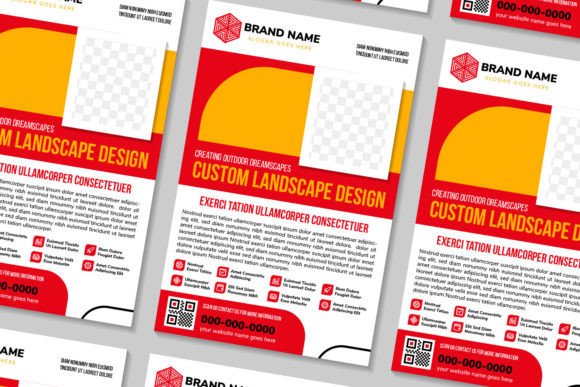
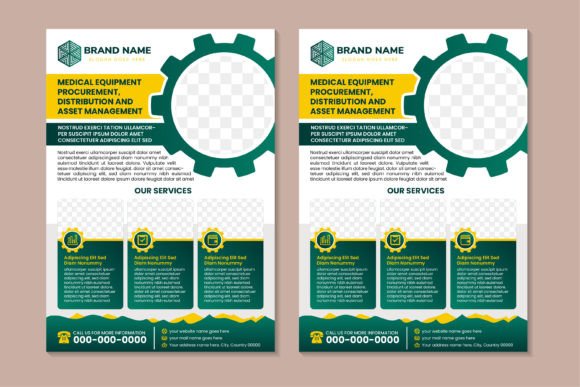
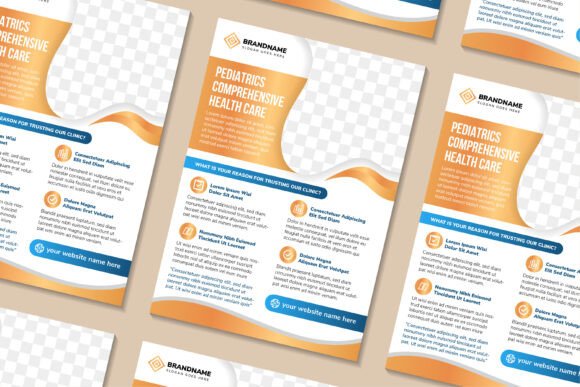
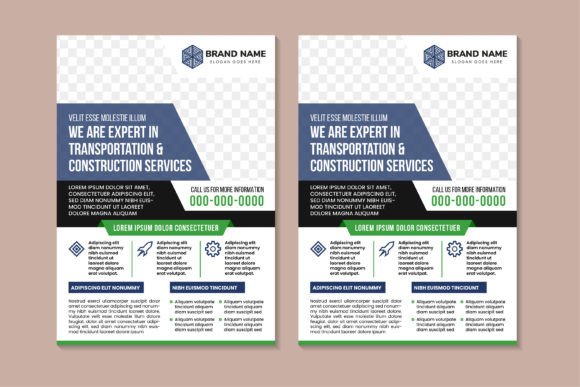
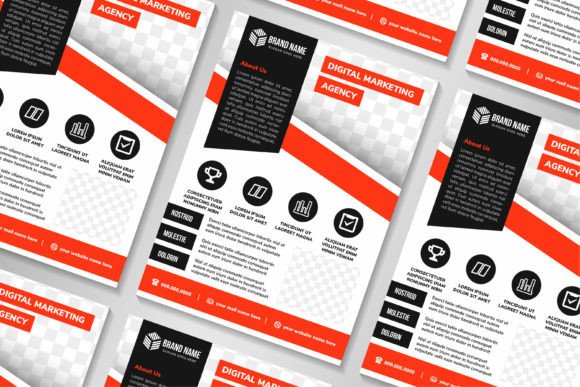
A vertical flyer digital marketing template refers to a pre-designed layout oriented in a portrait or upright format, created specifically for promotional use. Unlike horizontal or square alternatives, the vertical orientation lends itself well to reading on screens, fitting into standard document sizes such as A4, or being used in digital catalogs and online portfolios. These templates often include elements such as a white background, flat orange and black color accents, iconography, and infographic-style graphics. The design is typically 100 percent vector-based, allowing for clean scaling without loss of quality, and is provided at high resolution, often 300 dpi. Files are frequently delivered in formats like AI, EPS, JPG, and SVG, giving users flexibility across different software environments. The layout often includes a space for a photo collage, making it suitable for showcasing multiple images alongside text and data points.
At its core, a vertical flyer digital marketing template is a starting point. It organizes headlines, brief body copy, icons, and visual elements into a cohesive structure. The emphasis on flat design with orange and black accents creates a modern, corporate aesthetic that is neither overly flashy nor minimal to the point of being generic. This balance makes it a versatile tool for a range of industries, from finance and construction to creative services and education.
Why Consider a Vertical Flyer for Digital Marketing?
There are several practical reasons why a person or team might evaluate a vertical flyer digital marketing template. Understanding these motivations can help clarify whether this format is a good fit for a given project.
Ease of Customization and Editable Elements
One of the primary draws of these templates is that they come with editable text, shapes, and colors. This means you do not need to start from scratch. If you have basic familiarity with vector editing software such as Adobe Illustrator or similar programs, you can adjust the wording, swap out colors to match your brand palette, and reposition icons or images. This saves time and reduces the need for a dedicated graphic designer, especially for small businesses or marketing teams working with limited resources.
Consistency Across Campaign Materials
Using a vertical flyer digital marketing template can help maintain visual consistency across different pieces of collateral. Because the template includes predefined styles for headlines, body text, and iconography, you can produce multiple flyers that look like part of a cohesive set. This is particularly useful for annual reports, company profiles, catalogs, or promotional campaigns where a unified look reinforces brand recognition.
Infographic Capabilities for Data Presentation
Many vertical flyer templates incorporate infographic design elements, such as charts, progress bars, or numbered lists accompanied by icons. This makes them well-suited for presenting data-heavy content in a digestible way. For example, a marketing team might use a vertical flyer to summarize campaign results, or a financial advisor could use it to illustrate growth trends. The vertical layout naturally guides the reader’s eye from top to bottom, allowing for a logical flow of information.
High-Resolution and Vector Format Benefits
The fact that these files are provided in high resolution (300 dpi) and as vector graphics means they can be used for both digital display and print. You can place a vertical flyer on a website, share it as a PDF, send it via email, or print it on physical paper without worrying about pixelation or quality loss. This dual-use capability is a practical advantage for campaigns that span both online and offline channels.
Tradeoffs and Limitations to Keep in Mind
While vertical flyer digital marketing templates offer several advantages, they are not without tradeoffs. Being aware of these can help you make a more informed decision.
Limited Flexibility for Complex Layouts
Because a template is pre-structured, you are somewhat constrained by its original design. If your content does not fit neatly into the provided sections, you may need to force it into place or spend time modifying the layout significantly. For projects that require a highly unique visual identity or unconventional formatting, a custom design might be a better choice. The template works best when your content aligns with the assumed structure—headline, brief text, icons, and image collage.
Risk of Generic Appearance
Since templates are widely available, there is a chance that your final flyer will look similar to others using the same base design. This is not always a problem, but if differentiation is critical—such as in a highly competitive market or for a brand that emphasizes originality—the template may not provide the distinctiveness you need. Customizing the color palette, replacing icons, and using unique photography can mitigate this, but the underlying grid and composition will remain similar to the original.
Software and Skill Requirements
While the files are editable, they typically require vector editing software like Adobe Illustrator to modify. If you do not have access to such programs or are not comfortable using them, you may need to hire someone or invest time in learning. Some templates also come with layers and groupings that can be confusing if you are new to the software. In such cases, a simpler tool like Canva or a PDF-based template might be more accessible.
When a Vertical Flyer Digital Marketing Template Is a Strong Fit
Based on the features and limitations described, there are specific scenarios where this format tends to perform well.
- Quick turnarounds: If you need a promotional piece within hours or a few days, starting with a vertical flyer digital marketing template can significantly speed up production. The design foundation is already in place, so you only need to input your content and adjust colors.
- Standard business communications: For corporate brochures, company profiles, annual reports, or service overviews, a vertical layout with a clean, modern aesthetic is often appropriate. The orange and black color scheme, while specific, can be changed to match your brand guidelines.
- Digital-first campaigns: If your primary distribution channel is online—social media, email newsletters, website downloads—the vertical format works well on screens. It is also easy to embed in PDF catalogs or include in digital portfolios.
- Projects requiring photo collages: Templates that include designated space for multiple images are helpful for showcasing products, team members, case studies, or before-and-after comparisons. The collage area allows you to present visual evidence or demonstrations without cluttering the layout.
- Infographic-style storytelling: When your message involves steps, statistics, or comparisons, the infographic elements help break down complex information. Icons and color-coded sections guide the reader through the narrative.
When Alternatives May Be Worth Considering
There are also situations where a vertical flyer digital marketing template might not be the optimal choice, and other formats or approaches could serve you better.
- Extremely detailed or long-form content: If your content runs several pages or includes dense paragraphs of text, a multi-page brochure or a booklet format might be more appropriate. A single vertical flyer is best reserved for concise, scannable information.
- Highly creative or experimental branding: For brands that deliberately break away from standard layouts, a custom design that uses unusual grids, asymmetrical elements, or bold typography may be necessary. Templates tend to follow familiar, safe structures.
- You lack vector editing software: If you do not have access to Adobe Illustrator or similar programs, and you are not willing to learn, a template in AI or EPS format will be difficult to use. In this case, consider templates that are compatible with web-based editors or those provided in PowerPoint or Canva format.
- You need a horizontal or square format: Some platforms, such as certain social media channels or specific print ads, require landscape or square dimensions. A vertical flyer may need to be reformatted, which can introduce design challenges.
- You want to avoid any resemblance to stock designs: If your brand places a premium on originality and you want to ensure that no competitor uses a similar look, investing in a custom design from a professional is the safer route.
Practical Decision-Making Insights
To determine whether a vertical flyer digital marketing template is right for your project, consider the following factors:
- Audience expectations: Think about what your target audience is accustomed to seeing. For a corporate client, a clean, structured vertical flyer may convey reliability. For a creative audience, a more unconventional design might be needed to capture attention.
- Content length and type: If your message can be communicated with a strong headline, a few bullet points, and two or three images, a vertical flyer is likely sufficient. If you need to explain a complex process or include extensive data tables, a different format may work better.
- Your technical comfort level: Be honest about your ability to edit vector files. If you are confident in using layers, changing colors, and replacing linked images, a template will serve you well. If not, factor in the cost and time of hiring someone to make those edits.
- Brand consistency vs. uniqueness: Consider how important it is that your flyer blends with existing materials versus standing out. A template can be customized enough to match your brand colors and fonts, but it will retain the original composition. If that composition feels too generic, you may need to start with a different base or commission original work.
- Budget and timeline: Templates are generally inexpensive and quick to implement. If your budget is limited and your deadline is tight, they offer a practical solution. If you have both time and money to invest, a custom design will give you more control over the final result.
It is also worth noting that you can combine approaches. For example, you might use a vertical flyer digital marketing template as a starting point and then modify it heavily—changing the grid, introducing new iconography, and adjusting the color scheme to the point where the original structure is barely recognizable. This hybrid approach gives you a head start while still allowing for creative input.
Final Considerations
The vertical flyer digital marketing template is a tool among many in the broader landscape of promotional design. It offers a middle ground between a completely custom design and a generic, text-only document. By evaluating your specific needs—content requirements, audience preferences, technical resources, and timeline—you can decide whether this format supports your goals effectively.
When researching options, pay attention to the file formats included, the resolution, and whether the template provides editable layers. A well-organized file with clear instructions will save you time and reduce frustration. Also, consider the color scheme and icon style: while these can be changed, the initial aesthetic should at least be compatible with your brand direction to minimize rework.
Ultimately, the value of a vertical flyer digital marketing template lies in its ability to streamline production while maintaining a professional appearance. It is not a solution for every situation, but for many standard marketing communications, it can be a practical and efficient choice. By understanding both its strengths and its limitations, you can use it strategically to support your promotional efforts without over-relying on it or expecting it to perform in situations where a different format would be more effective.