Why Presentation Design Matters More Than Ever: A Practical Guide to the Hunora - Google Slide Template
In today’s fast-paced business landscape, the ability to communicate ideas clearly and persuasively is not just an advantage — it is a necessity. Whether you are pitching to a potential client, presenting quarterly results to stakeholders, or leading a team workshop, the visual quality of your slides directly influences how your message is received. This is why the ecosystem of presentation design is evolving rapidly, with tools like the Hunora - Google Slide Template emerging to meet the demands of modern professionals who value both aesthetics and efficiency.
The shift toward remote and hybrid work environments has fundamentally altered expectations around presentations. Teams no longer gather in boardrooms with projectors; instead, they share screens over video calls, distribute slide decks asynchronously, and rely on visuals to hold attention in distraction-rich digital spaces. In this context, a generic, text-heavy deck can undermine credibility. The Hunora - Google Slide Template offers a structured yet flexible foundation that addresses these challenges head-on, giving professionals a competitive edge in visual communication.
Understanding the Hunora - Google Slide Template
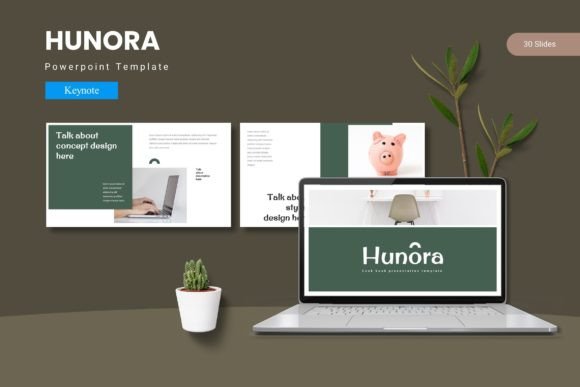
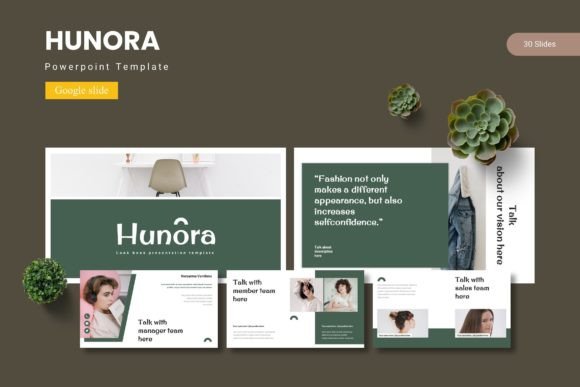
At its core, the Hunora - Google Slide Template is a comprehensive presentation framework designed for Google Slides. It provides 150 total slides across five premade color variations, with 30 slides per template. The layout structure includes section break slides, handcrafted infographic elements, and pixel-perfect illustrations. All graphics are resizable and editable, and the template uses picture placeholders that allow for easy drag-and-drop image insertion. In addition, the template includes gallery and portfolio slides, making it suitable for a wide range of use cases — from corporate reports to creative portfolios.
What sets the Hunora apart is not simply the volume of slides, but the thoughtful architecture behind them. The template is built on master slides, meaning that global changes — such as adjusting a color scheme or updating a font — can be applied consistently across the entire deck with minimal effort. This is a critical feature for professionals who need to maintain brand consistency without spending hours on manual formatting. The availability of five color schemes in the folder (Readme First, Font, and Photo information included) means users can quickly adapt the template to different brands, clients, or presentation contexts.
The Broader Context: How Presentation Templates Fit Into Today’s Workflows
To understand why the Hunora - Google Slide Template is capturing attention, it helps to look at the larger shifts in how professionals create and consume content. In the past, presentation design was often outsourced to graphic designers or internal creative teams. Today, thanks to the democratization of tools like Google Slides, PowerPoint, and Canva, many professionals are expected to produce presentation-ready materials themselves. This has created a gap: individuals who are subject matter experts may lack the design skills to translate their ideas into visually compelling slides. High-quality templates bridge this gap, allowing non-designers to produce studio-level presentations.
A recent trend in the creative and business technology space is the move toward modular, component-based design systems. Instead of starting from a blank canvas, users assemble slides from pre-built modules, much like building blocks. The Hunora template embodies this philosophy. Its 150 slides are not merely pre-made pages; they are modular components that can be rearranged, restyled, and repurposed to fit different narratives. This approach reduces friction in the creation process and empowers users to focus on storytelling rather than formatting.
Another significant trend is the growing emphasis on visual diversity within presentations. Audiences today expect more than bullet points and clip art. They want infographics, visual data representations, and well-considered layouts that guide the eye naturally. The Hunora template addresses this expectation through its handcrafted infographic slides, which are based on master slides for consistent styling. These infographic elements can be used to visualize data, illustrate processes, or compare concepts — tasks that are central to persuasive presentations across virtually every industry.
Why People Are Paying Attention to Hunora
The presentation template market is crowded, so why is the Hunora - Google Slide Template generating interest among professionals, creators, and marketers? Part of the answer lies in the template’s emphasis on pixel-perfect illustrations and resizable graphics. Many templates suffer from low-resolution assets or inflexible layouts that break when text is added. Hunora is designed to be edited without degradation, meaning users can adapt it to their own content without worrying about misaligned elements or distorted images.
Furthermore, the inclusion of a gallery and portfolio slide set makes the template particularly appealing to freelancers and creative entrepreneurs. These professionals often need to showcase their work in a compelling way — whether it is design projects, photography, or case studies. Having a dedicated slide type for galleries streamlines the process of building a portfolio deck, saving hours of manual layout work.
From a business perspective, the template’s five color variations allow for quick adaptation to different brand guidelines. For marketers who manage multiple client accounts, this is a tangible time-saver. Instead of rebuilding a deck from scratch for each client, they can duplicate the template file, select the appropriate color scheme, and begin populating content. This efficiency is especially valuable when tight deadlines are the norm.
Entrepreneurs and startup founders also benefit from the template’s professional polish. In early-stage companies, resources are often limited, and presentation quality can be a differentiator when seeking funding or partnerships. The Hunora template gives founders a way to present their vision with the same visual quality as more established competitors, leveling the playing field.
Changing Needs and Expectations in Presentation Workflows
The way professionals approach presentations has changed significantly in the last few years. One of the most notable shifts is the move from linear, slide-by-slide decks to interactive, non-linear experiences. This is partly driven by the rise of tools like Google Slides that support linking and embedding, but it is also a response to changing audience behavior. People are less willing to sit through long, passive presentations. They want to engage, ask questions, and explore content at their own pace.
The Hunora - Google Slide Template supports this shift by offering clearly defined section breaks and modular layouts. Section break slides act as visual pauses, helping to structure the presentation into digestible chunks. This is particularly useful in longer decks, where maintaining audience attention is a challenge. By using section breaks effectively, presenters can create a rhythm that keeps viewers engaged and helps them retain key messages.
Another important change is the expectation for presentations to be data-driven yet accessible. Infographics have become a standard way to present data because they combine visual appeal with clarity. The handcrafted infographic slides in the Hunora template are designed to convey data without overwhelming the viewer. They follow a consistent visual hierarchy and use spacing and typography to guide the eye. For professionals who are not data visualization experts, these ready-made infographic layouts provide a reliable framework for presenting numbers and insights in a way that resonates.
The growing prevalence of mobile-first consumption also affects how presentations are designed. More and more audiences view slides on their phones or tablets, whether during a video call or while reviewing a deck independently on the go. Templates that rely on small text or dense layouts perform poorly in these contexts. Hunora’s clean, spacious layouts and clear typography ensure that slides remain legible and impactful even on smaller screens. Picture placeholders enable users to add high-quality images that communicate instantly, reducing reliance on text-heavy explanations.
Practical Examples and Observations
To illustrate how the Hunora - Google Slide Template works in real-world scenarios, consider the case of a marketing professional preparing a campaign review deck. With 150 slides at their disposal, they can select a cohesive set of slides that includes a title slide, section breaks for each campaign pillar, data infographics to show performance metrics, and gallery slides to display creative assets. The five color variations allow them to match the deck to the client’s brand colors without manually adjusting every element. This approach reduces the timeline from days to hours, a tangible benefit in a fast-paced agency environment.
For a freelance graphic designer, the portfolio slides are a standout feature. Instead of building a custom grid for each project, they can leverage pre-structured gallery layouts that maintain visual consistency across projects. The ability to drag and drop images into picture placeholders means they can update their portfolio quickly as new work is completed. The editable nature of the graphics also allows them to add subtle branding elements, such as a personal logo or watermark, without breaking the design system.
In a corporate setting, the template’s master slide functionality becomes invaluable. A company that conducts quarterly reviews across multiple departments can use a single Hunora template with a designated color scheme. Each department can adapt the slides to their specific content while maintaining a consistent visual identity. This uniformity strengthens brand perception and makes it easier for audiences to navigate presentations from different teams. The inclusion of section break slides helps to separate departmental reports within a larger deck, creating a logical flow that is easy to follow.
Another observation from the education and training sector: instructors and trainers are increasingly using Google Slides as a delivery tool for both live and asynchronous learning. The Hunora template’s clean layouts and infographic elements are well-suited for instructional content. For instance, a trainer explaining a step-by-step process can use an infographic slide to illustrate each stage, making the material more accessible than a simple list. The template’s flexibility also allows instructors to repurpose content for different courses by switching color schemes and updating images.
Connecting the Topic to Larger Developments
The popularity of the Hunora - Google Slide Template is not an isolated phenomenon. It reflects a broader movement toward tool-agnostic, design-forward content creation. As cloud-based productivity suites like Google Workspace continue to gain market share, the demand for templates that are natively compatible with these platforms will only increase. Professionals no longer want to be locked into proprietary software; they want flexibility, collaboration features, and cross-platform compatibility. Templates like Hunora satisfy these requirements by delivering high-quality design within an accessible, cloud-native environment.
There is also a deeper cultural shift at play: the expectation that professional communication should be both efficient and beautiful. The days when presentation design was an afterthought are fading. In a world where attention is scarce, visual communication is a strategic asset. The rise of remote work has accelerated this realization, as screen-based communication places greater emphasis on what is seen rather than what is heard. Templates that help professionals raise the visual bar without requiring design training are poised to become indispensable tools in the modern workflow.
Furthermore, the intersection of presentation design and personal branding is becoming more prominent. Freelancers, consultants, and solopreneurs are increasingly aware that their slide decks serve as extensions of their brand identity. A polished, cohesive deck communicates professionalism and attention to detail, qualities that build trust with clients and partners. The Hunora template, with its multiple color schemes and editable elements, gives individuals the ability to craft a presentation that feels personal and aligned with their brand, without starting from scratch.
From a technological standpoint, the integration of AI-powered design tools is on the horizon, but templates remain a practical bridge between manual design and automated generation. While AI can suggest layouts or generate images, it often lacks the contextual understanding to create a coherent narrative flow. Templates provide a structured foundation that humans can imbue with meaning. The Hunora template, with its emphasis on section breaks, infographics, and master slides, provides a framework that supports storytelling while leaving creative control in the hands of the presenter.
Conclusion
The Hunora - Google Slide Template is more than just a collection of slides — it is a response to the evolving needs of professionals who demand efficiency, consistency, and design excellence in their presentations. As the boundaries between designer and presenter continue to blur, templates like Hunora empower individuals to communicate with confidence and clarity. Whether you are a marketer juggling multiple accounts, an entrepreneur seeking investment, or a freelancer building your portfolio, the ability to quickly create a visually compelling deck is a practical advantage that translates directly into professional impact.
By offering 150 slides, five color schemes, master slide architecture, and handcrafted infographic elements, the Hunora template addresses the real-world workflow challenges that busy professionals face every day. It aligns with broader trends in visual communication, remote collaboration, and design democratization, making it a relevant and valuable tool in the modern presentation toolkit.