Your Roadmap to Financial Freedom: A Complete Guide to Financial Planning Services
In today’s fast-moving world, managing money effectively is no longer a luxury—it's a necessity. Whether you're just starting your career, raising a family, or preparing for retirement, having a clear financial roadmap can mean the difference between constant stress and lasting peace of mind. That’s where financial planning services come in. More than just budgeting or saving, comprehensive financial planning is a holistic approach that aligns your money with your life goals. This guide will walk you through everything you need to know about financial planning, from its core purpose to how you can get started today.
What Is Financial Planning?
At its simplest, financial planning is the process of setting goals for your financial future and creating a strategy to achieve them. It involves taking a close look at your current financial situation, identifying your short-term and long-term objectives, and mapping out a realistic path forward. A good financial plan covers areas like income, expenses, savings, investments, insurance, taxes, and estate planning. The goal is to give you control over your finances rather than letting them control you.
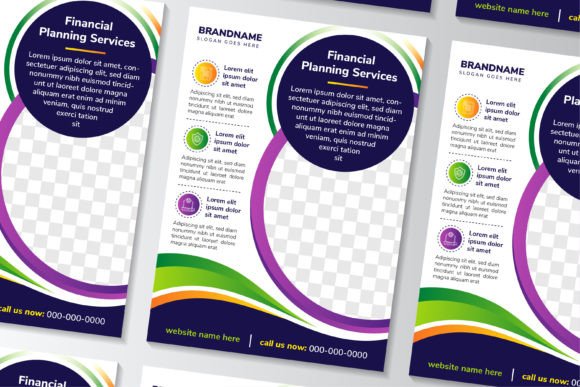
Financial planning services provide professional guidance to help individuals and businesses make informed decisions. Whether you work with a certified planner or use a high-quality financial planning vertical flyer or corporate brochure template to organize your own plan, the principles remain the same: clarity, discipline, and forward thinking.
Why Financial Planning Matters More Than Ever
The modern financial landscape is more complex than ever. With rising living costs, unpredictable markets, and evolving tax laws, even financially savvy people can feel overwhelmed. A solid financial plan acts as your personal compass. Here’s why it matters:
- Clarity and Direction: A plan turns vague hopes (like “I want to be comfortable in retirement”) into measurable targets (like “I need $1.2 million by age 65”).
- Stress Reduction: Knowing you have an emergency fund, insurance coverage, and a diversified investment portfolio can significantly lower anxiety.
- Better Decision-Making: When faced with a major purchase, a career change, or an investment opportunity, your financial plan gives you a framework for evaluating options.
- Long-Term Wealth Building: Consistent, disciplined planning—combined with the power of compound interest—helps you grow wealth steadily over time.
- Adaptability: Life is full of surprises. A good plan is flexible enough to accommodate changes like marriage, children, job loss, or unexpected medical expenses.
Financial planning isn't just for the wealthy. Anyone can benefit, regardless of income level. In fact, those with modest incomes often gain the most because every dollar counts.
Key Components of a Comprehensive Financial Plan
A thorough financial plan typically includes several interconnected elements. Understanding each one will help you see the big picture.
1. Budgeting and Cash Flow Management
This is the foundation. Without knowing where your money is going, you can't plan effectively. A good budget tracks income and expenses, identifies spending leaks, and ensures you're living within your means. Many magazine and flyer vertical layout designs for financial planning highlight the importance of a balanced budget as the starting point.
2. Emergency Fund
Financial experts recommend saving 3 to 6 months' worth of living expenses in a liquid, accessible account. This fund protects you from unexpected events like job loss, car repairs, or medical bills—without derailing your long-term investments.
3. Debt Management
Not all debt is bad, but high-interest debt (such as credit cards) can be a major obstacle. A financial plan includes a strategy for paying down debt efficiently, often by prioritizing high-interest balances first or using consolidation methods.
4. Investment Planning
Investing is how you grow your wealth over time. This component covers asset allocation (stocks, bonds, real estate, etc.), risk tolerance, diversification, and time horizon. Whether you're investing for retirement, a child's education, or a major purchase, your plan should match your goals.
5. Retirement Planning
Retirement may seem far away, but the earlier you start, the better. A retirement plan estimates how much you'll need, determines how much to save each month, and identifies the best accounts (401(k), IRA, etc.) to use. Many financial planning vertical flyer templates include visual timelines that make retirement goals feel more tangible.
6. Insurance and Risk Management
Life, health, disability, and property insurance protect you and your family from financial catastrophe. A planner helps you assess what coverage you truly need—not too little, not too much.
7. Tax Planning
Taxes can take a big bite out of your income and investment returns. Strategic tax planning—using deductions, credits, tax-advantaged accounts, and timing—helps you keep more of what you earn.
8. Estate Planning
This involves preparing for the transfer of your assets after death. Wills, trusts, beneficiary designations, and power of attorney documents ensure your wishes are carried out and your loved ones are protected.
The Financial Planning Process: Step by Step
Financial planning isn't a one-time event—it's an ongoing process. Most planners follow a structured approach:
- Define Goals: What do you want to achieve? Be specific about timelines and amounts.
- Gather Data: Collect information on income, expenses, assets, debts, and existing insurance or investment accounts.
- Analyze Your Situation: Evaluate your net worth, cash flow, risk exposure, and progress toward goals.
- Develop a Plan: Create actionable strategies for each component—budgeting, saving, investing, insurance, tax, and estate planning.
- Implement: Put the plan into action, which may involve opening accounts, adjusting investments, or purchasing insurance.
- Monitor and Adjust: Review your plan regularly (at least annually) and make changes as life circumstances or market conditions evolve.
Many people find it helpful to use a corporate brochure template or a financial planning vertical flyer to visually organize their plan. These templates—often featuring geometric wave circle objects and clean vector illustrations—make complex information more digestible and professional.
Common Misunderstandings About Financial Planning
Despite its importance, financial planning is surrounded by myths. Let's clear a few up:
- “I don’t have enough money to need a plan.” Actually, planning is most valuable when resources are limited. It helps you prioritize and make every dollar count.
- “Financial planning is only about investing.” Investing is just one piece. Budgeting, debt management, insurance, and estate planning are equally important.
- “I can just do it myself with a spreadsheet.” While DIY is possible, a professional planner brings expertise, objectivity, and accountability. Even using a high-quality vector illustration template can help structure your thoughts.
- “Once I make a plan, I’m done.” Life changes—marriage, children, job changes, market shifts—all require plan updates. Financial planning is a continuous cycle.
How to Choose a Financial Planning Service
If you decide to work with a professional, here’s what to look for:
- Credentials: Look for Certified Financial Planner (CFP®) or similar designations that require rigorous training and ethics.
- Fee Structure: Understand whether they charge hourly, a flat fee, a percentage of assets under management, or commissions. Fee-only planners often have fewer conflicts of interest.
- Fiduciary Duty: A fiduciary is legally required to act in your best interest. This is a critical distinction.
- Experience and Specialization: Some planners specialize in retirement, small business, or young professionals. Choose one who fits your needs.
- Communication Style: You should feel comfortable asking questions and discussing sensitive topics like debt or spending habits.
Many planners use financial planning vertical flyer designs and corporate brochure template layouts to present their services in a clear, visually appealing way. These often include sleek geometric wave circle objects and vector illustration elements with photo space, making the information easy to scan and understand.
Bringing It All Together: Your Next Steps
Financial planning doesn't have to be complicated. Start small: track your spending for a month, define one short-term and one long-term goal, and open a separate savings account for emergencies. As you grow more comfortable, expand your plan to include investing, insurance, and estate considerations.
If you prefer a visual approach, consider using a financial planning vertical flyer template in A4 size or a corporate brochure template with an abstract design. Many of these templates are available in high-resolution 300dpi and include 100% vector graphics with editable text, shapes, and color. You can download them in formats like AI, EPS, JPG, and SVG. Whether you use them for personal planning, client presentations, or advertising your own financial services, they add a professional polish that helps communicate complex ideas clearly.
Remember, financial planning is a journey, not a destination. The best time to start was yesterday. The second best time is today. With the right tools, a solid understanding, and a commitment to your goals, you can build the financial future you deserve—one thoughtful step at a time.
Final Thoughts
Financial planning services are more than just numbers on a page. They are the bridge between where you are and where you want to be. Whether you design your own plan using a beautifully crafted magazine and flyer vertical layout template or partner with a certified professional, the key is to take action. The clarity, confidence, and security you gain will pay dividends for years to come.
Thank you for choosing to invest your time in learning about financial planning. If you have questions or need guidance on selecting the right template or service, don't hesitate to reach out. The right plan—and the right tools—can transform your financial life.