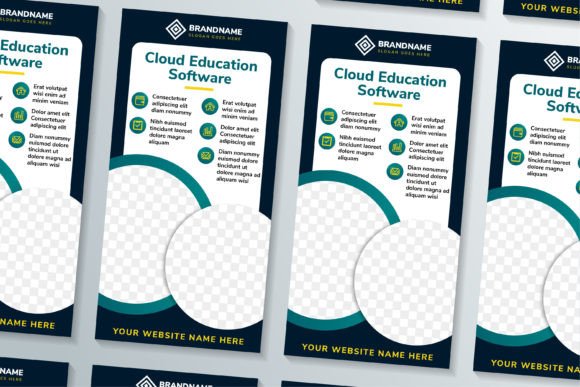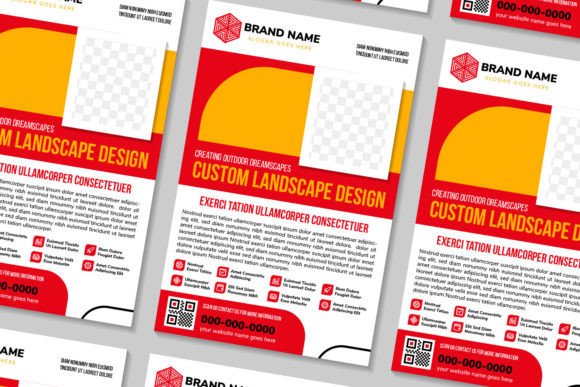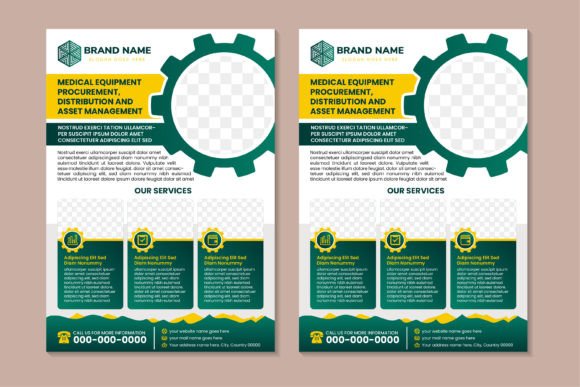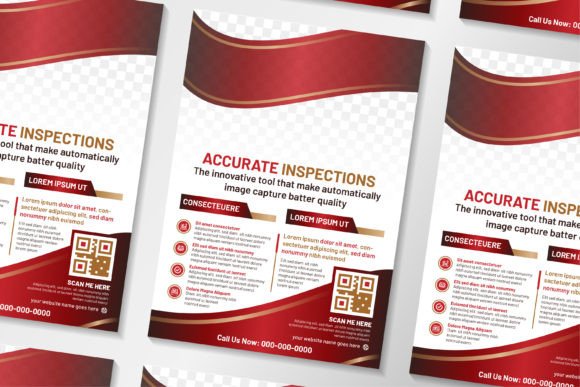
How to Use a Horizontal Banner and Description Abstract Design Template to Attract More Customers
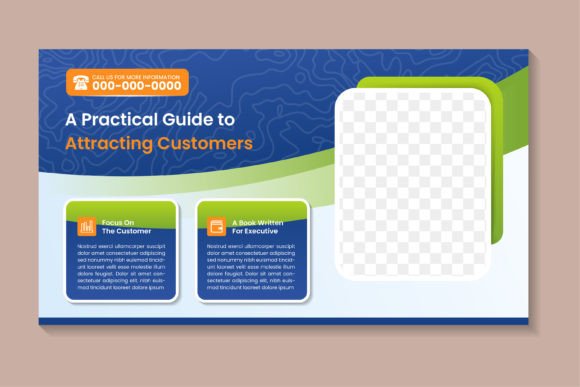
In today’s visually saturated digital landscape, capturing a potential customer’s attention within seconds is both an art and a science. Whether you are a small business owner, a marketing professional, or a creative entrepreneur, the tools you use to communicate your message matter immensely. One such tool that has gained significant traction among designers and marketers is the Practical Guide Horizontal Banner and Description abstract design template. This versatile layout, often featuring a horizontal flyer structure with space for a photo, custom line patterns, and contour topography maps in transparency white, blends aesthetics with functionality. In this article, we will explore what makes this template so effective, how it fits into modern marketing and business communication, and how you can leverage it to build a stronger connection with your audience.
Understanding the Template: More Than Just a Pretty Layout
At first glance, a horizontal banner template may seem like a simple design asset. But when you examine its components—the abstract geometry, the subtle contour lines, the transparent topography, and the carefully chosen blue and green palette—you begin to see why it works so well for customer-facing materials. This type of design is not random; it is built on principles of visual hierarchy, clarity, and emotional resonance.
The template typically includes:
- Horizontal layout – ideal for wide-format displays, social media headers, website banners, and print flyers.
- Space for a photo – allowing you to personalize the banner with a relevant image of your product, team, or service.
- Custom line pattern contour topography map in transparency white – adding depth and a modern, high-tech feel without overwhelming the main message.
- Blue and green color scheme – colors commonly associated with trust, calm, growth, and nature.
- Full vector graphics at 300 DPI – ensuring crisp output in print and digital media.
- Editable text, shapes, and colors – giving you complete control to match your brand identity.
These features are not just decorative. They serve a strategic purpose: to guide the viewer’s eye, communicate professionalism, and create a memorable visual impression. When you use such a template, you are essentially borrowing a well-tested design framework that has been optimized for engagement.
Why Abstract Design and Topography Patterns Resonate with Customers
Abstract design, especially when combined with topography-inspired line patterns, taps into a viewer’s innate sense of exploration and curiosity. Contour lines, originally used in mapping to represent elevation and terrain, have a way of drawing the eye across a surface. When these lines are rendered in transparency white over a blue and green gradient, they create a sense of depth and movement—almost like looking at a modern, stylized map of an unknown territory.
This visual metaphor is powerful for customer attraction because it suggests guidance, discovery, and progress. You are not simply presenting information; you are inviting the customer on a journey. The banner becomes a gateway to understanding what you offer, and the abstract elements subtly reinforce the idea that your brand can help navigate complex challenges.
Moreover, the use of blue and green is backed by color psychology. Blue conveys reliability, security, and professionalism—qualities that customers look for when choosing a service or product. Green evokes growth, harmony, and freshness. Together, they create a balanced, calming effect that reduces the anxiety often associated with making a purchasing decision.
Practical Applications: Where This Template Shines
One of the greatest strengths of this horizontal banner and description template is its versatility. Here are some real-world scenarios where it can be used effectively:
1. Social Media and Online Advertising
Platforms like Facebook, LinkedIn, and Instagram favor horizontal visuals for feed posts and story highlights. A well-designed banner with a clear call-to-action and a professional abstract background can significantly improve click-through rates. The space for a photo allows you to feature a product shot or a portrait of your team, while the contour lines add a layer of sophistication that sets you apart from generic stock imagery.
2. Print Flyers and Brochures
Despite the shift to digital, print materials still hold value in networking events, trade shows, and local marketing. The 300 DPI resolution ensures that the banner prints sharply, even at larger sizes. The editable text and shapes mean you can customize the flyer for a specific promotion or event without needing to start from scratch.
3. Website Hero Sections and Landing Pages
Your website’s hero banner is the first thing visitors see. Using a horizontal layout with a clear description area helps communicate your value proposition immediately. The abstract topography background adds visual interest without distracting from the core message. Combined with a strong headline and a compelling photo, this template can transform a static page into an engaging entry point.
4. Presentation Slides and Corporate Reports
For internal or external presentations, a clean, modern banner can serve as a title slide or section divider. The blue and green palette works well in professional settings, while the line pattern adds a creative touch that keeps the audience engaged. The fact that all graphics are fully vector means you can scale elements without losing quality.
5. Educational and Informational Materials
If you are creating a guide, e-book cover, or workshop handout, this template provides a structured yet visually appealing framework. The description area can be used to outline key takeaways, and the contour map pattern subtly reinforces the idea of learning and exploration.
How to Customize the Template for Maximum Impact
While the template comes ready to use, taking the time to personalize it will yield better results. Here are some practical tips:
- Choose a photo that tells a story. Avoid generic stock images. Instead, use a photograph that reflects your brand’s personality—whether it is a candid shot of your team at work, a close-up of your product in use, or an evocative image that relates to your industry.
- Adjust the color opacity. The transparency white contour lines are designed to be subtle, but you can tweak the opacity to match your brand’s visual weight. A lighter touch works well for clean, minimalist brands, while a slightly bolder line pattern can give a high-tech or industrial feel.
- Write concise, benefit-focused copy. The description area should highlight what the customer gains, not just what you offer. Use short sentences and bullet points if needed. Remember, less is often more.
- Maintain legibility. Because the background includes abstract patterns, ensure that any text placed over it has sufficient contrast. You can add a semi-transparent overlay behind the text if necessary.
- Use the vector files wisely. The included AI, EPS, and SVG formats allow you to edit individual elements without rasterizing. This means you can resize the banner for different platforms—from a small social media tile to a large print banner—without losing sharpness.
Common Misunderstandings About Using Design Templates
Some people worry that using a template will make their brand look generic or unoriginal. But the truth is, a high-quality template like this one serves as a foundation, not a finished product. The editable nature of the file means you can infuse it with your own branding—your logo, your colors, your typography, your imagery. What remains consistent is the underlying structure that has been designed for visual effectiveness.
Another misconception is that abstract design elements are purely decorative and add no real value. In reality, thoughtful abstract graphics can enhance comprehension and retention. For example, contour lines can visually break up large blocks of text, making the content feel less dense and more approachable. They can also create a sense of rhythm that guides the reader from one section to the next.
Finally, some users assume that 300 DPI and vector formats are only necessary for print. While it is true that print requires higher resolution, having a vector file also benefits digital use. You can export the same master file in multiple resolutions, ensuring consistency across all touchpoints—from a website banner to a printed brochure to a mobile-friendly image.
The Role of This Template in Modern Customer Attraction
In an era where consumers are bombarded with thousands of marketing messages daily, standing out requires more than just a good offer. It requires a cohesive visual identity that communicates professionalism, clarity, and value. The Practical Guide Horizontal Banner and Description abstract design template helps you achieve that by providing a ready-made structure that is both beautiful and functional.
Whether you are launching a new product, promoting a service, or simply trying to increase brand awareness, this template allows you to create high-quality marketing materials without needing to hire a professional designer. The included file formats—AI, EPS, JPG, and SVG—ensure that you can work with whatever software you prefer, and the well-organized layers make editing straightforward even for beginners.
By using a design that incorporates contour topography, transparency, and a blue-green gradient, you align your brand with feelings of trust, growth, and exploration. These are precisely the emotions that encourage customers to take the next step—whether that means clicking a link, filling out a form, or making a purchase.
Final Thoughts: A Tool for Real Results
Design templates are not shortcuts; they are accelerators. When you choose a well-crafted template like this one, you are leveraging the expertise of professional designers who understand composition, color theory, and user psychology. The result is a banner that not only looks good but also performs well in attracting and retaining customer interest.
As you explore the possibilities of this template, remember that the most effective marketing materials are those that reflect your authentic brand while making it easy for customers to understand what you offer. The horizontal layout, the space for a photo, the transparent contour lines, and the editable vector graphics all work together to help you do exactly that.
Take the time to customize the template thoughtfully, test different versions, and pay attention to how your audience responds. With the right message and a visually compelling design, you will be well on your way to building stronger connections with the people who matter most to your business.
Thank you for choosing this template. Whether you are a seasoned designer or just starting out, this resource is designed to support your creative and marketing goals. If you have any questions about customization, printing, or digital optimization, do not hesitate to reach out. Good luck, and happy designing.